A live tote station can be the best part of your event or an awkward bottleneck — and the difference is almost entirely in the planning. After running these at conferences, activations, weddings, and festivals, here is what separates a station people rave about from one they avoid.
Curate the menu; don't offer everything
Too many choices freeze the line. The sweet spot is three or four strong, on-brand designs plus one personal option — a first name, a monogram, or a patch to add. Guests feel they are customizing without agonizing, and the queue keeps moving. A tight menu also keeps the finished bags looking cohesive rather than chaotic.
Design the flow, not just the table
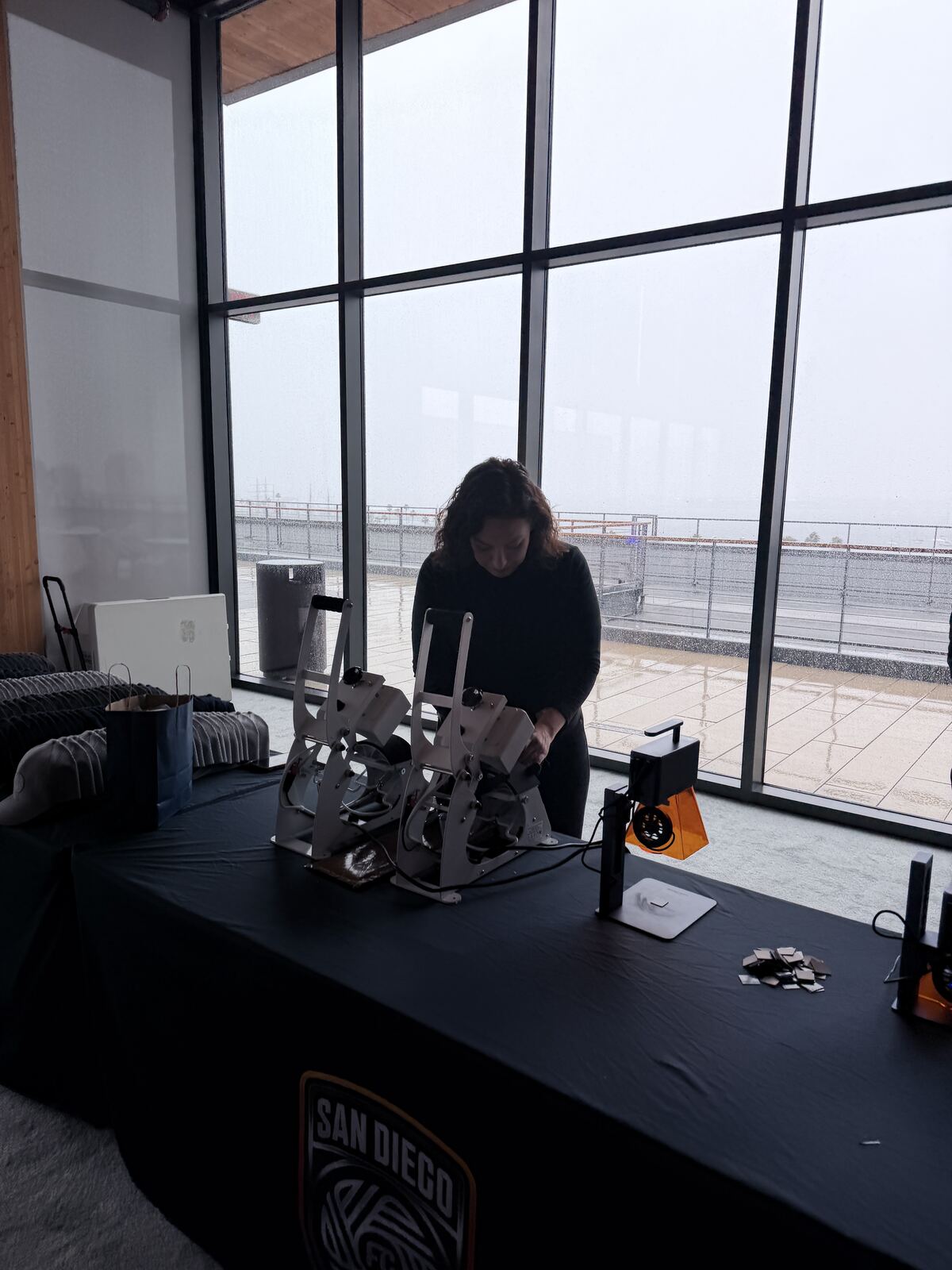
The station should read as pick, print, cool, carry. Guests choose at one point, hand off to an operator, and pick up a finished bag a step down the line — never crowding the hot press. A clear queue and a visible finished-bag handoff make the whole thing feel fast, even at peak.
Staff to your guest count
One DTF station finishes 40 to 60 totes an hour. If you expect 300 guests in two hours, one table will back up — so plan two stations and enough operators to match. The goal is a line that feels like anticipation, not a wait. It is always cheaper to add a station than to disappoint a room.
Place it where the energy is
A tote station is a magnet, so use it. At a conference, put it where you want booth traffic. At a party, near the action so the press cycle draws a crowd. The visible making — guests filming, comparing bags — is half the value, so give it a spot where people can gather. Want help scoping the menu, flow, and staffing for your room? Send the details and we will map it out.